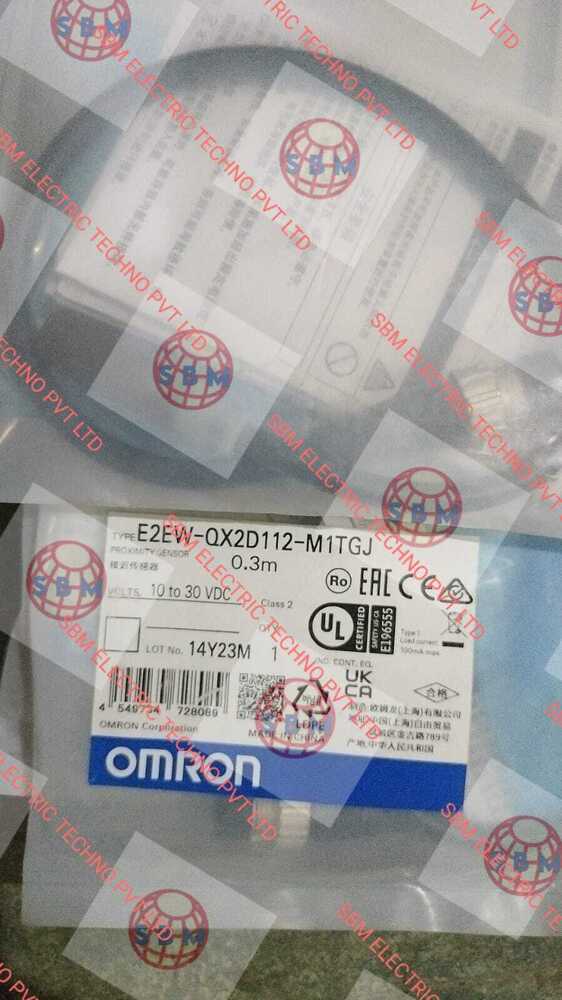
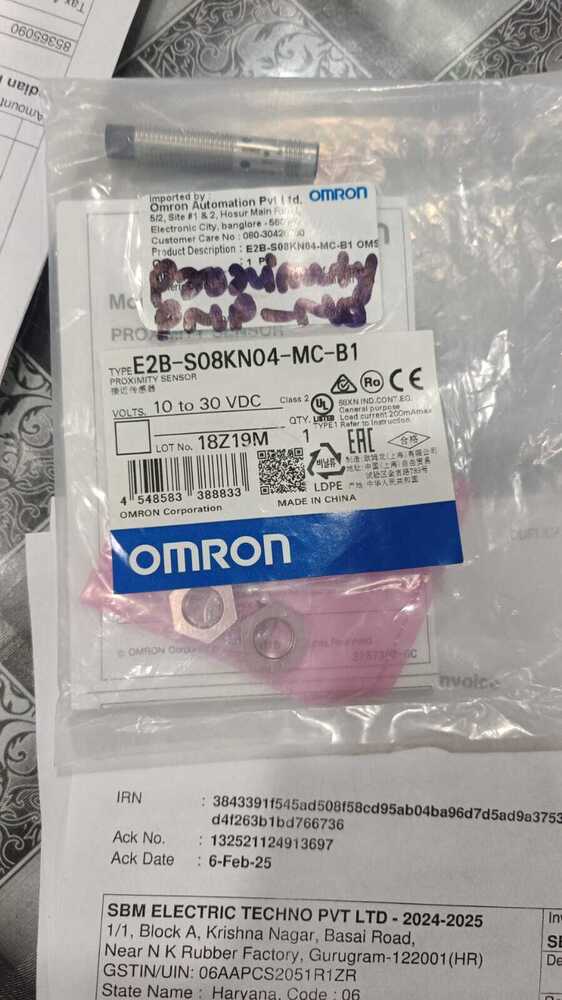
About OMRON PROXIMITY SENSOR 10 to 30VDC, E2EW-QX2D112-M1TGJ 0.3M,E2EW-X6B3T12-M1
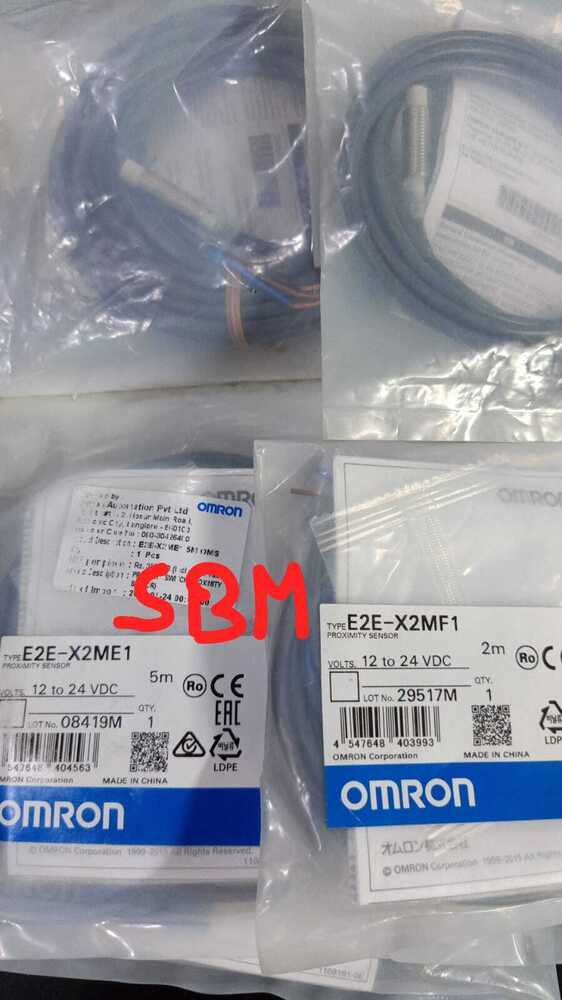
Discover the new, in-demand OMRON Proximity Sensor series featuring models E2EW-QX2D112-M1TGJ 0.3M and E2EW-X6B3T12-M1. These remarkable sensors boast unbeatable price points while delivering dominant performance in industrial automation. Engineered with exceptional nickel-plated brass and robust plastic enclosures, they offer high durability and advanced protection against oil, water, and harsh environments. Key features include precise metallic object detection, fast response time, LED status indicators, and weld-resistant coating, all compliant with CE and RoHS standards. Perfect for suppliers, traders, and wholesalers in China seeking reliable, precision sensing solutions.
Versatile Industrial Usage for Precision Sensing
The OMRON Proximity Sensor models E2EW-QX2D112-M1TGJ 0.3M and E2EW-X6B3T12-M1 are designed for industrial automation with high accuracy and reliability. Ideal for the detection and positioning of metallic objects, these sensors excel on surfaces exposed to welding, oil, or high temperatures. Their application space includes object presence detection in assembly lines and harsh manufacturing environments, ensuring operational efficiency and stability over prolonged use.
Sample Availability, Payment Flexibility, and Shipped Goods
For customers interested in evaluating product quality prior to large-scale orders, samples of the OMRON Proximity Sensor range are available. Goods transport is efficiently managed to ensure prompt delivery, with favorable payment terms designed to suit business needs. Goods are shipped securely across the main domestic market, ensuring products arrive at competitive rates and in optimal condition, supporting seamless integration into production lines.
FAQs of OMRON PROXIMITY SENSOR 10 to 30VDC, E2EW-QX2D112-M1TGJ 0.3M,E2EW-X6B3T12-M1:
Q: How does the OMRON Proximity Sensor detect objects in industrial settings?
A: The sensor uses advanced inductive sensing technology to detect the presence of metallic objects precisely and without physical contact, making it ideal for automation and object positioning tasks.
Q: What are the primary benefits of using these proximity sensors in harsh environments?
A: These sensors are designed with oil-resistant, robust enclosures and weld-resistant coatings, ensuring exceptional durability and consistent performance even in challenging, high-temperature or spatter-prone conditions.
Q: When is it recommended to use the flush versus non-flush mounting types?
A: Flush mounting is recommended where the sensor tip must be level with the surrounding surface for space efficiency, while non-flush is preferred when higher sensing distances or tolerance to nearby metal is required.
Q: Where can I request samples and inquire about shipping for these sensors?
A: Samples can be requested through authorized suppliers, traders, or wholesalers, particularly those operating in the main domestic market in China. Shipping arrangements and rates will be provided at the time of inquiry.
Q: What is the typical process for integrating OMRON Proximity Sensors into an automation system?
A: Integration involves mounting the sensor, connecting via the specified M12 connector or 3-wire DC interface, configuring NO or NC output as needed, and calibrating sensitivity for precise detection using the built-in LED status indicator.






 Get Latest Price

 Send Inquiry
 Send Inquiry
 Send SMS